Lambull Intelligence Report: Data Center Show 2026
A Market Perspective from the Ground + Industry Dialogue
Author: Steven Hull
Source: Event attendance + post-event discussion with senior industry operator & key contact
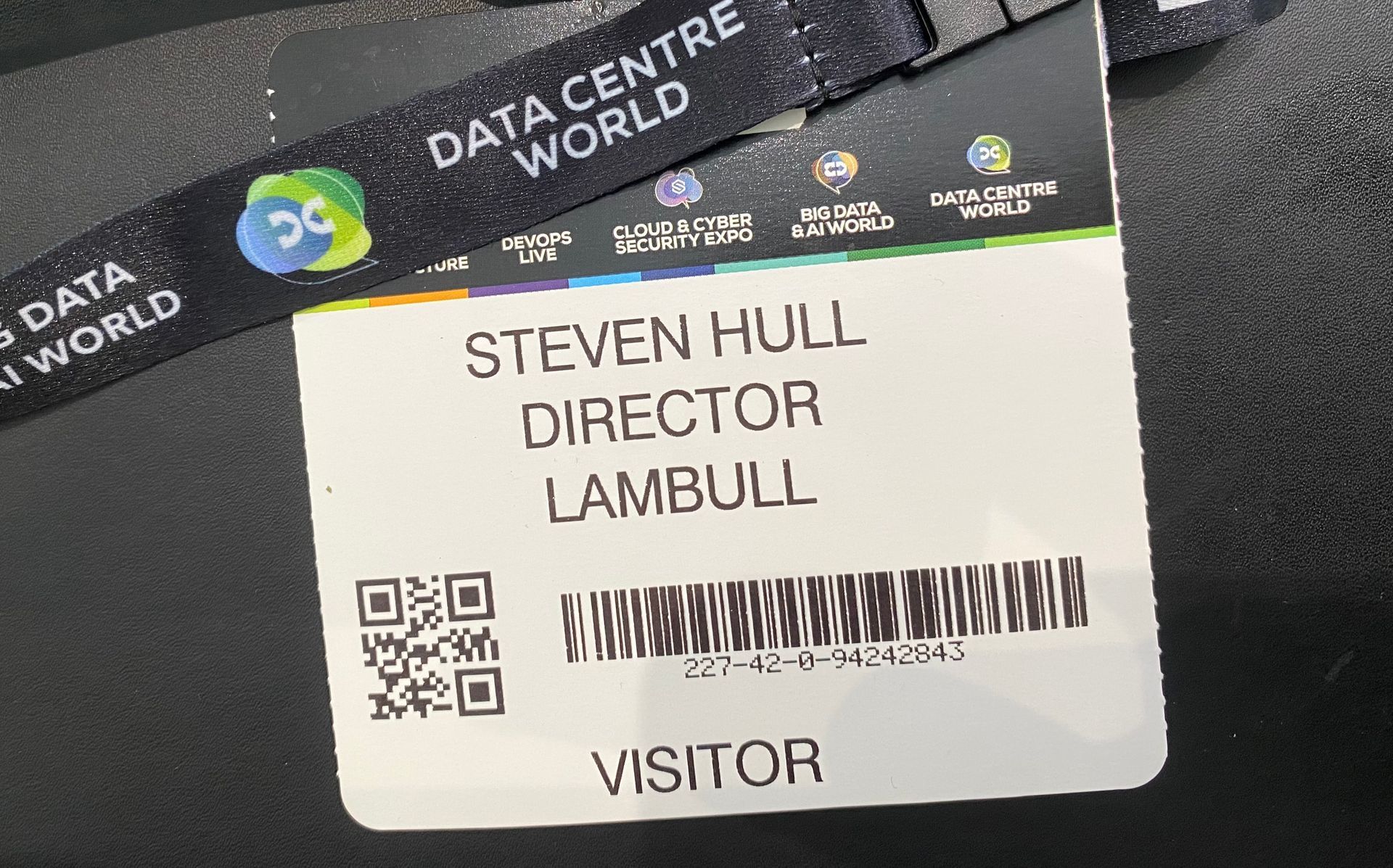
Steven Hull, Founder of Lambull, attended Data Centre World 2026 with a senior industry operator — using the day to engage both new entrants and long-standing market contacts.
This report reflects both real-time observations from the show and a follow-up discussion one week later, capturing a more grounded view of how the market is actually evolving beyond the event floor.
Event Overview
Q: What was the overall attendance and energy at Data Centre World 2026?
A: The show was exceptionally busy, as busy as, if not busier than, previous years. There was palpable energy around AI, high-power-density, and liquid-cooling technologies. All exhibiting vendors have pivoted their marketing and branding to focus on AI and next-generation infrastructure, signalling a clear industry-wide shift in priorities.
Q: Who attended the show?
A: While there was strong attendance from traditional cooling vendors and infrastructure suppliers, hyperscalers and major operators were notably limited in presence. These companies are instead targeting larger US conferences, such as Nvidia's technology conference, OCP San Jose, and Google's technical conferences, which have become massive industry events that essentially take over entire cities.
Market Themes & Challenges
Q: What was the dominant conversation at the show?
A: Infrastructure and power emerged as the central theme. The overarching question on everyone's mind: "How are we actually going to deliver these ambitious AI data centre projects?" This was particularly acute in the UK and European markets, where major AI factory projects are in the planning stage but face significant hurdles.
Q: What are the biggest barriers to deploying new data centres?
A: Multiple interconnected challenges emerged:
- Government & Local Policy: Restrictive regulations limiting development
- Infrastructure Gaps: Insufficient power grid capacity and connectivity
- Skills Shortages: Lack of construction, vendor operations, and engineering expertise
- Planning Approvals: Extended timelines for regulatory sign-off
- Supply Chain Constraints: Raw materials on 6-8 month lead times
Q: Is the industry prioritising sustainability or speed?
A: Speed of deployment is the current priority. While sustainability matters, the urgent need to get infrastructure online is driving decisions. However, this urgency is creating tension—there's pressure to accelerate beyond what traditional planning and compliance frameworks allow.
The Supply Chain Reality Check
Q: What's the biggest operational constraint right now?
A: The supply chain is the critical bottleneck. When one supplier increases capacity, another fails to keep pace. It's a roller coaster effect where demand far exceeds supply at every level—from raw materials to finished components.
Q: Tell us about the raw materials situation.
A: It's severe. Key materials face 6-8 month lead times:
- Rare earth magnets: Essential for many cooling components
- Stainless steel castings: Required for infrastructure equipment
- Specialised metals: Used across multiple applications
Q: How are suppliers responding?
A: Many suppliers are asking customers to fund their capacity expansion—new machinery, tooling, and production facilities. This creates a risk-sharing challenge: suppliers need assurance that demand will sustain before investing millions in new capacity. Many experienced suppliers are hesitant, having seen boom-bust cycles before.
"The issue: every market is competing for the same finite raw materials. When demand for AI data centres surges, it simultaneously pulls resources from other industries."
Innovation & Product Trends
Q: Were there significant new product launches at the show?
A: Data Centre World isn't typically a venue for major product launches. Those announcements happen at specialised innovation conferences like DCD New York (which features dedicated product innovation stages) or at major tech conferences like OCP and Supercomputing.
Q: What innovation themes stood out?
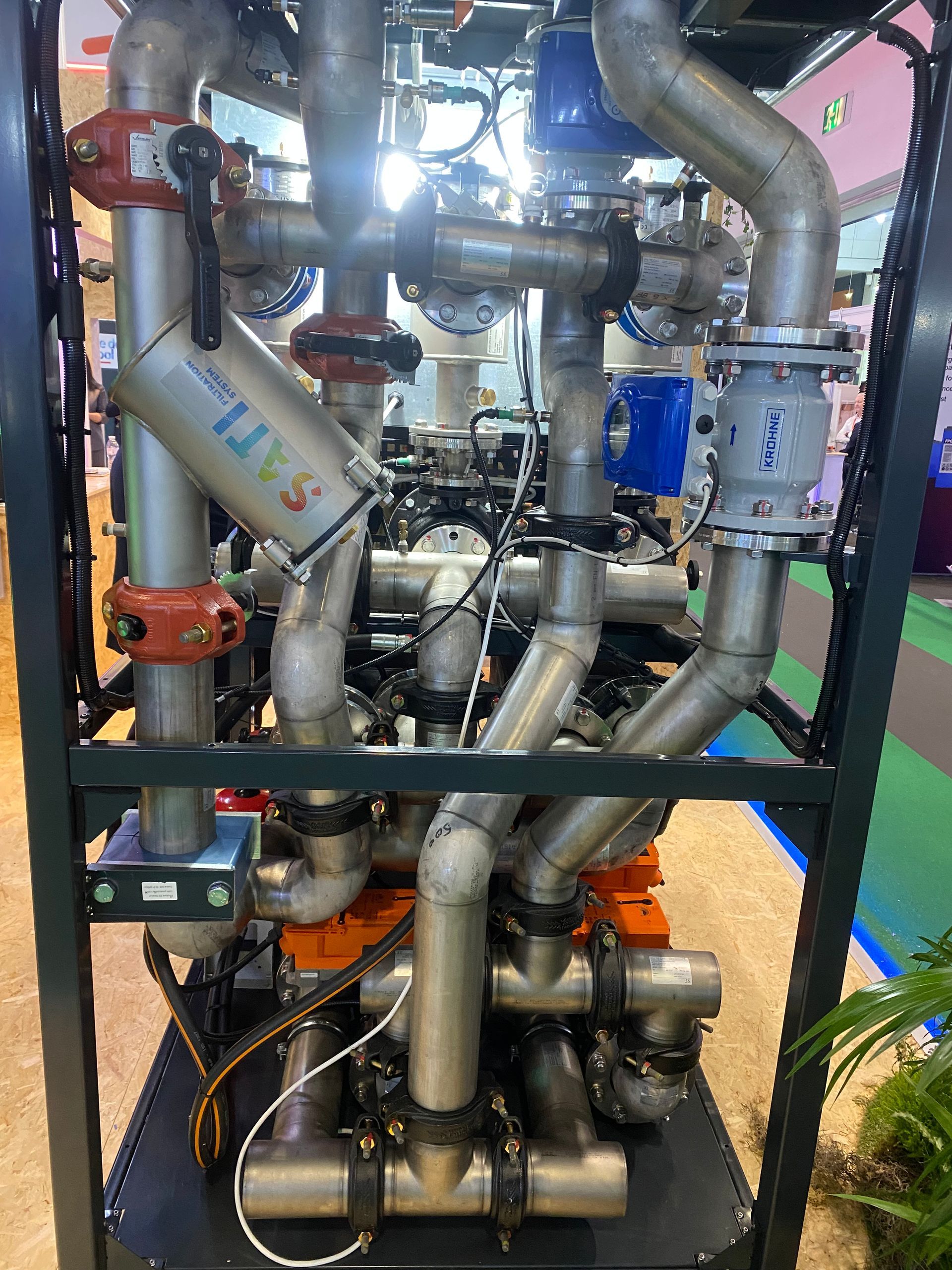
A: Modular, off-site construction dominated conversations:
- Prefabrication: Steelwork, fabrications, and pipework are increasingly built off-site
- Plug-and-play deployment: Reducing on-site construction time
- Speed-to-deployment focus: Innovation driven by the need to accelerate timelines
This represents a fundamental shift from traditional on-site construction methods.
Q: What about cooling solutions specifically?
A: The industry is moving rapidly toward:
- Liquid cooling at the chip level: Direct-to-chip solutions becoming mainstream
- Two-phase fluid technology: Growing investment from major oil & gas companies (Shell, BP)
- Hybrid solutions: Integrated air-liquid cooling systems
- Decentralised power generation: On-site power solutions to supplement grid power
Market Dynamics & Consolidation
Q: What's happening to smaller, innovative companies?
A: They're being acquired at a rapid pace. Major players such as Schneider Electric, Vertiv, and others are acquiring innovative startups rather than developing solutions internally.
Examples include:
- Schneider is acquiring Motivair (for direct-to-chip liquid cooling)
- HPE is acquiring cooling innovators
- Vertiv expanding through acquisition
This reflects a strategic reality: large established companies resist cannibalizing their existing product sales, so they buy innovation instead.
Q: Why don't large vendors develop breakthrough products internally?
A: Established players face a classic innovator's dilemma. A breakthrough product that's "half the price and half the energy consumption" of your current bestseller is actually a threat to your revenue. You'd need to sell twice as much volume just to maintain sales. This resistance to internal disruption is why smaller innovators often lead, and why acquisitions have become the primary innovation pathway for large companies.
Q: Are UK/European companies particularly attractive to American buyers?
A: Yes. European and UK engineering firms are viewed as having superior speed and agility in innovation. While American companies excel at replicating proven methods at scale, European firms are seen as faster at developing novel solutions and validating and testing them. This makes them attractive acquisition targets.
Strategic Implications
Q: What does this mean for companies in the data centre space?
A: There are essentially three categories:
- Large Established Players (Vertiv, Schneider, etc.): Have deep market knowledge and extensive sales channels but resist disruptive innovation. They'll acquire rather than cannibalise.
- Mid-Market Companies: Facing the greatest challenge. They know their existing customers well but may lack a broader understanding of the market. Vulnerable to disruption if they don't innovate.
- Innovative Startups: Have fresh ideas but limited scale and resources. Increasingly acquired by larger players.
Q: What's the path forward for mid-market players?
A: Companies must move beyond linear adaptation of existing products. The old playbook—"we'll just adapt our HVAC chiller for data centres"—won't work.
Instead, companies need:
- Fresh strategic thinking across sales, marketing, product, and innovation
- Clean-slate product development approaches
- Deep customer and end-user problem identification
- Willingness to cannibalize existing products with better solutions
- Cross-functional teams focused on next-generation solutions
Q: What about power solutions?
A: Power is becoming as critical as cooling. The industry is exploring:
- On-site generation: Gas turbines, nuclear (via Rolls Royce), hydrogen generation
- Decentralised power: Reducing grid dependency
- Backup power innovation: More compact, efficient solutions for high-density environments
- Grid support models: Some facilities generate excess power back to the grid
"This represents a massive opportunity for innovation beyond traditional cooling."
Looking Ahead: 5-Year Outlook
Q: Where will the biggest growth opportunities be?
A: Five key areas:
- Advanced Cooling Technologies: Two-phase fluids, hybrid solutions, direct-to-chip systems
- Power Solutions: On-site generation, backup power innovation, decentralised systems
- Materials Science: New materials for high-density environments
- Modular Construction: Prefabrication and rapid deployment methods
- Automation & Simplification: Addressing skills shortages through innovation
Q: Will there be a "bust" after this boom?
A: Unlikely to be a traditional bust. The fundamental infrastructure need is too large and the future applications too broad. However, there will likely be a dip once the initial surge of AI data centre buildout normalises. The industry will then settle into a sustainable growth phase focused on upgrades and optimisation rather than explosive expansion.
Q: What should companies be preparing for now?
A:
- Invest in supply chain resilience: Don't assume current suppliers can scale indefinitely
- Develop next-generation products: Start now on solutions needed in 2-3 years
- Build market intelligence: Understand real customer problems, not just stated needs
- Consider strategic partnerships: Acquisition and collaboration will accelerate
- Plan for skills gaps: Innovation and automation will be necessary to overcome labour shortages
- Think beyond cooling: Power, materials, and modular construction are equally critical
RECENT INSIGHTS